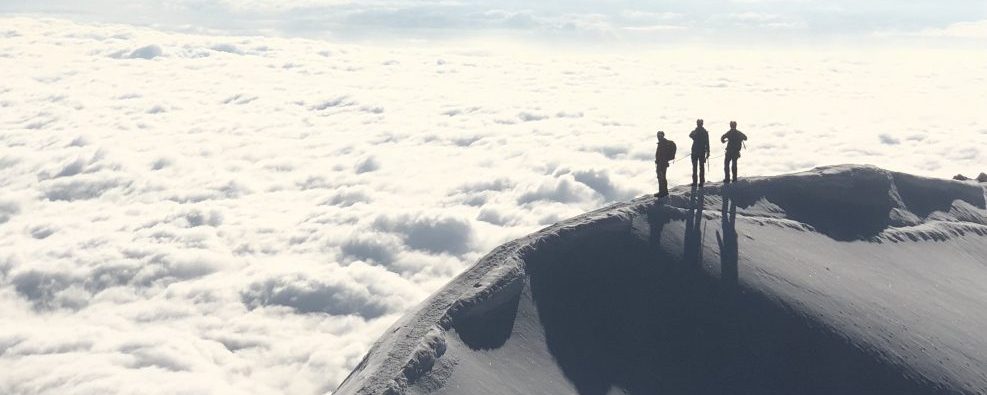
OR Splitter Glove
 I was super reluctant to try out a pair of crack gloves… While I have taped my hands in the past for certain routes, the idea of wearing a crack glove really seemed like cheating! Nonetheless, I gave them a try and it is hard to go back now! For me, the real advantage is taking them on Alpine rock routes. First, they are much lighter than carrying a roll of tape on a long approach. Second, they take seconds to put on opposed to making a decent tape glove, which makes them super convenient to wear when you need them and take them off when you don’t. Often on a long alpine route there may only be a pitch where taping up would be nice, so with the Splitter glove clipped to your harness you can easily put them on and save some damage to your skin! These gloves are super light and much less bulky then many of the other crack gloves offered. They seem like they could be destroyed in one pitch, but I have worn them on several outing and so far they are stood up very well!
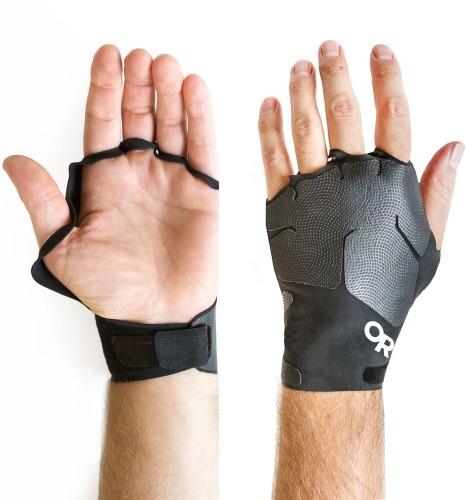
Outdoor Research “Uberlayer” Jacket
If you are looking for an awesome insulating layer that wi
 ll keep
you warm, breath and work alone as an
outerlayer as well, look no further. I got to use this jacket last season and it is great. The days of wearing simple fleece insulating layers are over for me! The Polartec “Alpha” fabric in this jacket does an awesome job of breathing, retain it’s warmth when wet, blocking the wind and looking good around town too! This jacket is right at home using ski touring or ice climbing.
Outdoor Research “Warrant” Gloves
 Gloves are one of the the most important, yet least talked about pieces of gear for ice climbing. You need a pair of gloves that will keep your hands warm and still offer good dexterity. Normally I climb with a really light pair of gloves and carry a warmer pair for the belays. This year I have done a lot of days on the ice in temps hovering in the single digits and my normal lightweight gloves (OR Stormtracker) were just not cutting it! I started climbing with the Warrant and after they broke in they became my go to glove. Warm, but not too bulky, which really helps in keeping from getting pumped, and made with good quality leather so they will last more than one rappel. So, if you’re in the market for some new ice climbing gloves these are worth considering. Make sure to size them small to allow for some stretch during the break in.
Guiding on Rainier
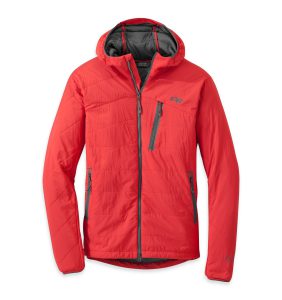
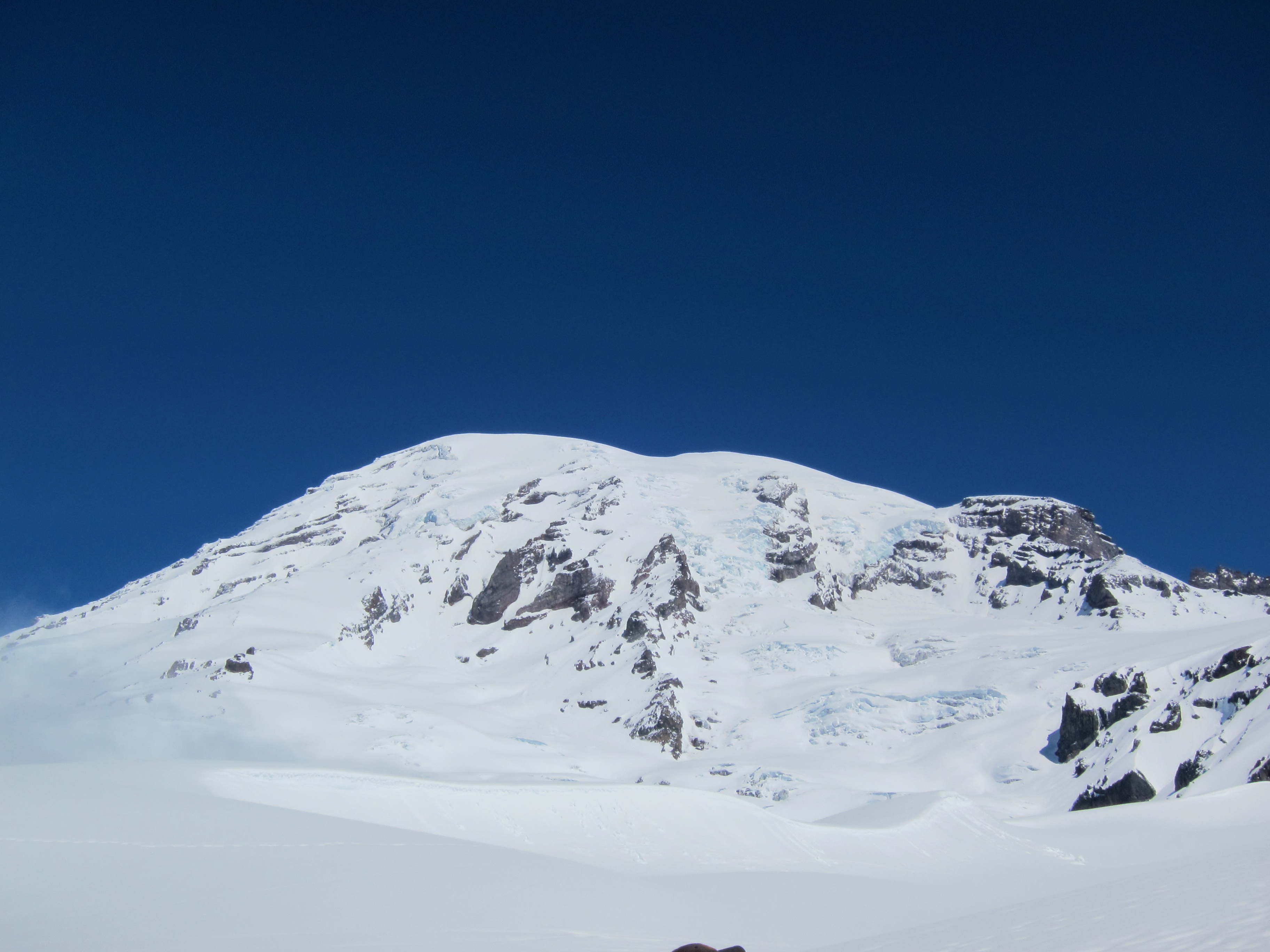
Early June, Adam and I left the comfort of our Salt Lake City home to work on mighty Rainier, a 14,411ft (4,392.5m) high volcano in Washington State, for Rainier Mountain Guides (www.rmiguides.com).
We drove 15hours straight to Ashford, where RMI and its facilities are located. Lodging is provided for the guides and we share two areas: The “upscale” Ranch, and the “Farm”. It was super fun to stay with the great community of guides who work at RMI, cooking dinners or going out to dinner together.
Adam and I worked the Four Day Summit Climb (http://www.rmiguides.com/rainier/?id=3&program=4-Day-Summit-Climb), which climbs the classic Ingraham Direct route at this time of year, and later in the seaon, the Disappointment Cleaver. For the Four Day Summit Climb, we start the program with an orientation, which includes a gear check, talking about Mount Rainier’s history, conditions on the route, how the climb will unfold and what he expect of the clients.
The following day, we meet the clients at the RMI Basecamp after the daily guides meeting. We drive up to Paradise and hike to find snow to do the snow school. Right now, there is so much snow left at Paradise, that we can get on snow right away. We teach clients skills that will help them summit Rainier with a guide. This includes how to walk efficiently and safely on snow, with and without crampons, how to use an ice axe, how to self arrest, how to travel with a rope properly and how to be be efficient during breaks on the mountains. We also teach them Leave No Trace principles to keep the mountain as clean as possible and preserve the mountain as it is for future generations.

Jesse in self-arrest position
Unfortunately, there was a lot of moisture in the NW while we worked on Rainier. The weather forecast never looked great and we often had to do the snow school in the rain, or hike to Muir in the rain.
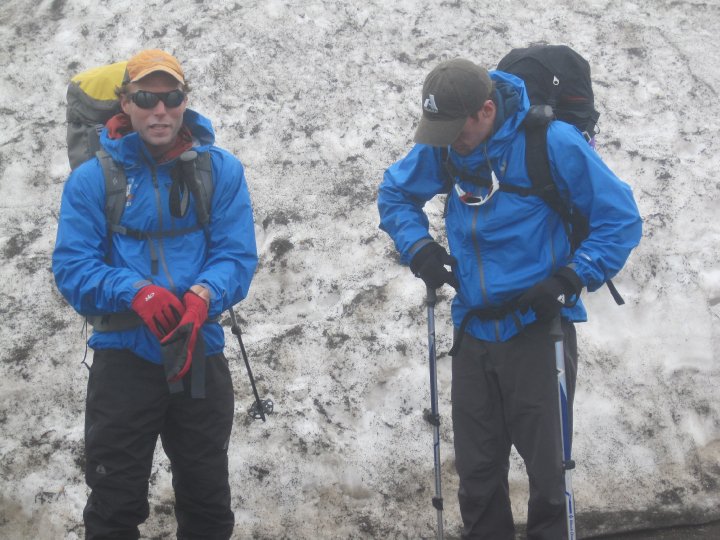
Adam and Tim in the rain on the way to Muir

The Butler House, where guides eat and sleep, and boil water for the clients.
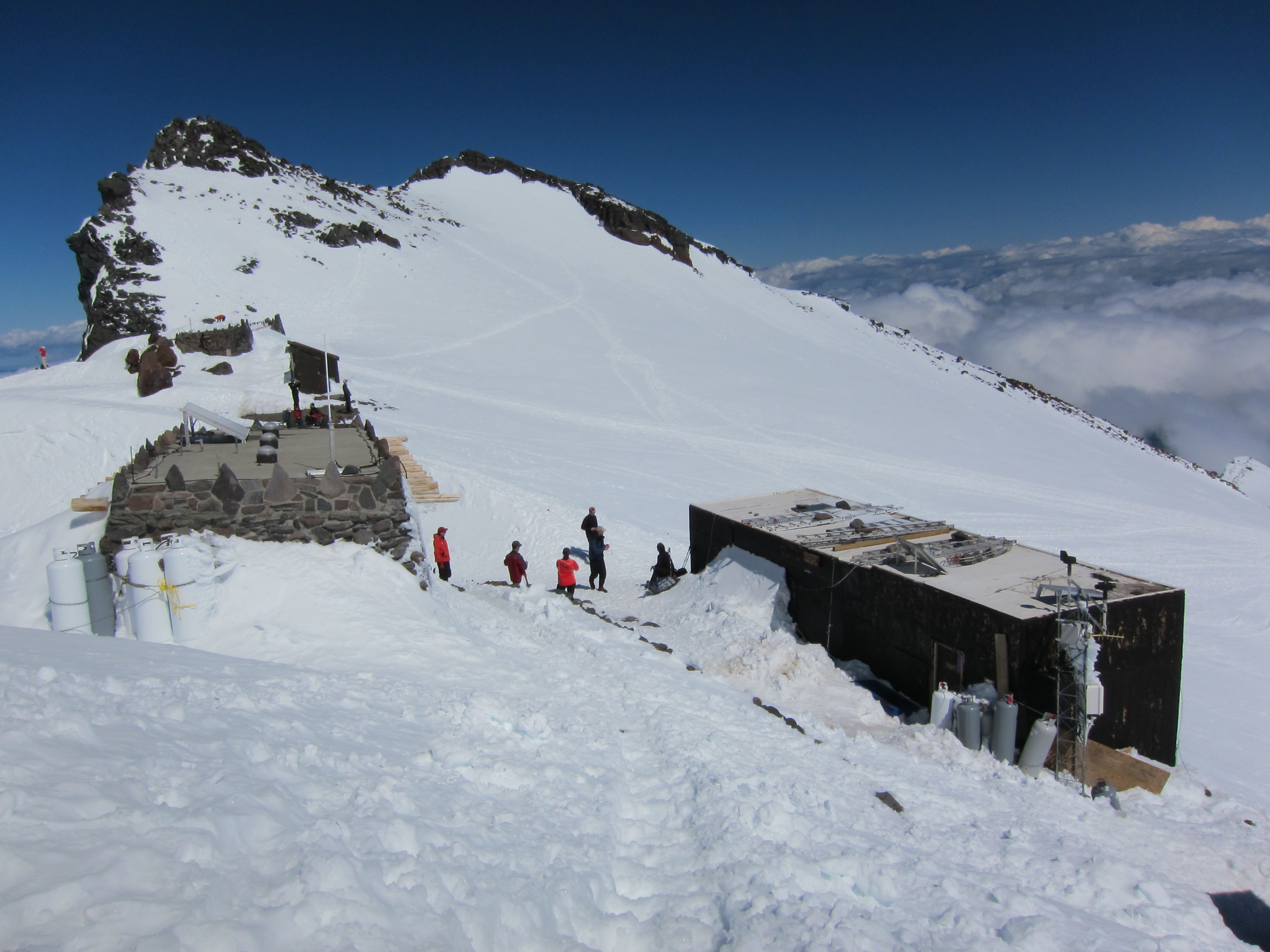
View from the Butler House on the Gambu, where the clients sleep. On the left is the ranger’s living quarters.
The Gambu sleeps 18 clients. It’s a pretty old building that was built for temporary use a long time ago and was never taken down, so we still use it. Clients only spend a few hours in there, since we get up around midnight to climb Mount Rainier.

Inside the Gambu
Depending on the weather, we wake up clients anywhere from 11pm to 2am or even later. If the sky is clear and conditions on the mountain are good, we get up very early. We leave camp with helmet and headlamps on, crampons and harness on and ice axe in hand.

We start our climb by headlamp and walk for about an hour in the dark, crossing the Cathedral Gap and making our way to our first stop: the Ingraham Flats. This is where other guide services have their high camp. So this is a “safe” place. But this is also how far the cloud from the June 6th avalanche came down!
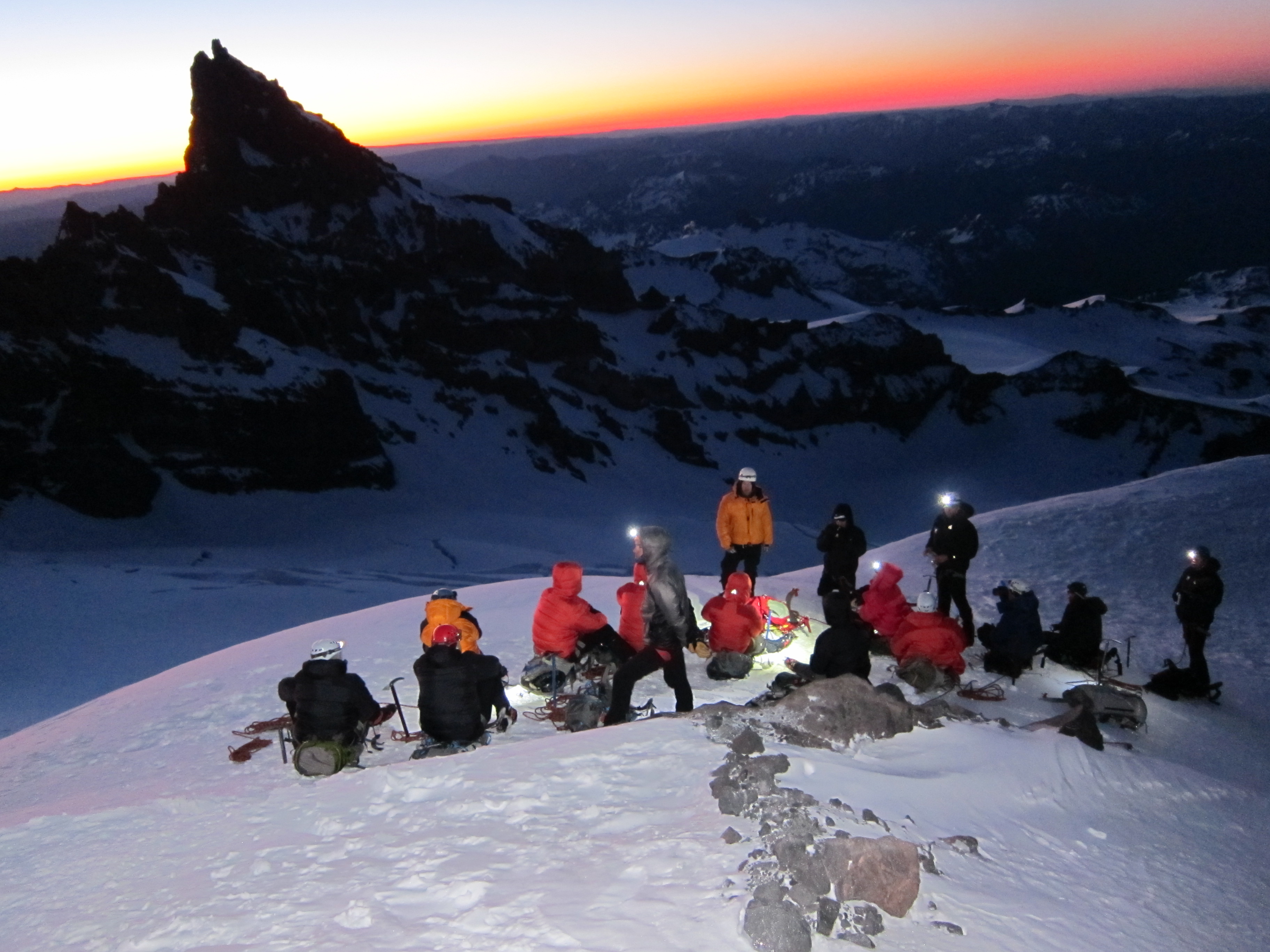
Ingraham Flats with sunrise on Little Tahoma
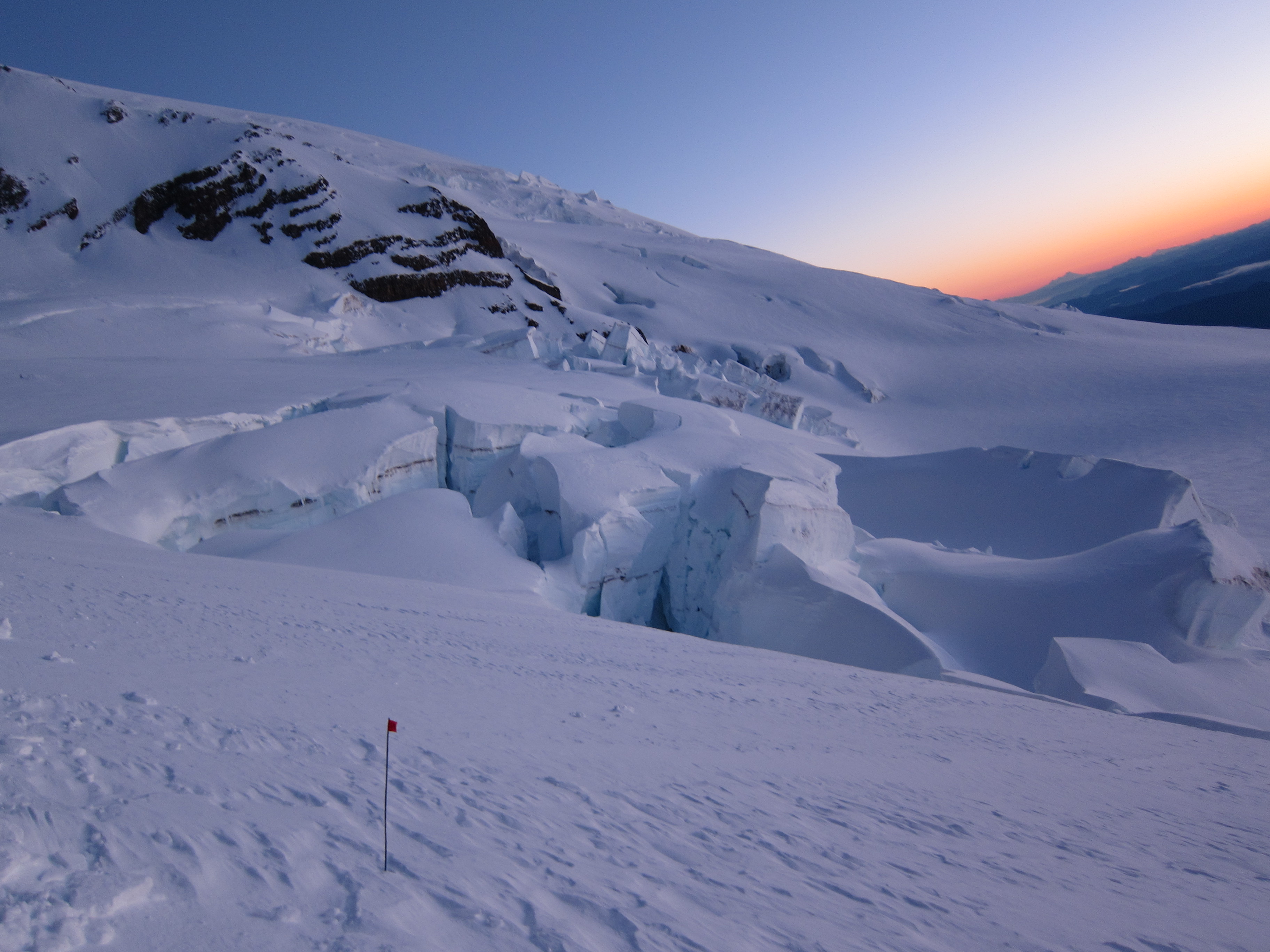
Crevasses below Cathedral Gap
On our first trip, conditions on the mountains weren’t very good. It had been snowing for a few days at Camp Muir and the wind had been howling at upper elevation. That, together with cold temperatures, made the perfect combination for an avalanche to occur. We hiked to the Ingraham Flats and had decided that we would go no further. We broke the news to our clients and explained why we were going to turn around. There were 11 people ahead of us, so it was hard for clients to understand why we wouldn’t keep going. Sometimes you wish that there would be a small benign avalanche in the distance to prove your point. We were about to dig a pit for clients to understand how the snowpack works. But as we looked up, a massive avalanche was coming down toward us. We definitely thought that it was headed for us, so we will started running. The snow was so deep though that we were not going anywhere in a hurry. So, we hunkered down expecting to get hit. But like a fist turned into a caress, we were merely sprinkled by the cloud. Adam was a little higher up than me and he saw a glove sticking out of the snow. The 11 people ahead of us had all been caught in the 300mx1200m avalanche. Adam and a few other guides (Tyler Jones and Mark Falender) dug out two more Koreans. One of them was blue already, wasn’t breathing and was unresponsive. I organized for clients to go down with another guide, Tom, so they could be out of avalanche hazard and then went up to watch over the rest of the crew to make sure no other avalanche was coming down on them.
1 person is still missing in action, and all the others survived.
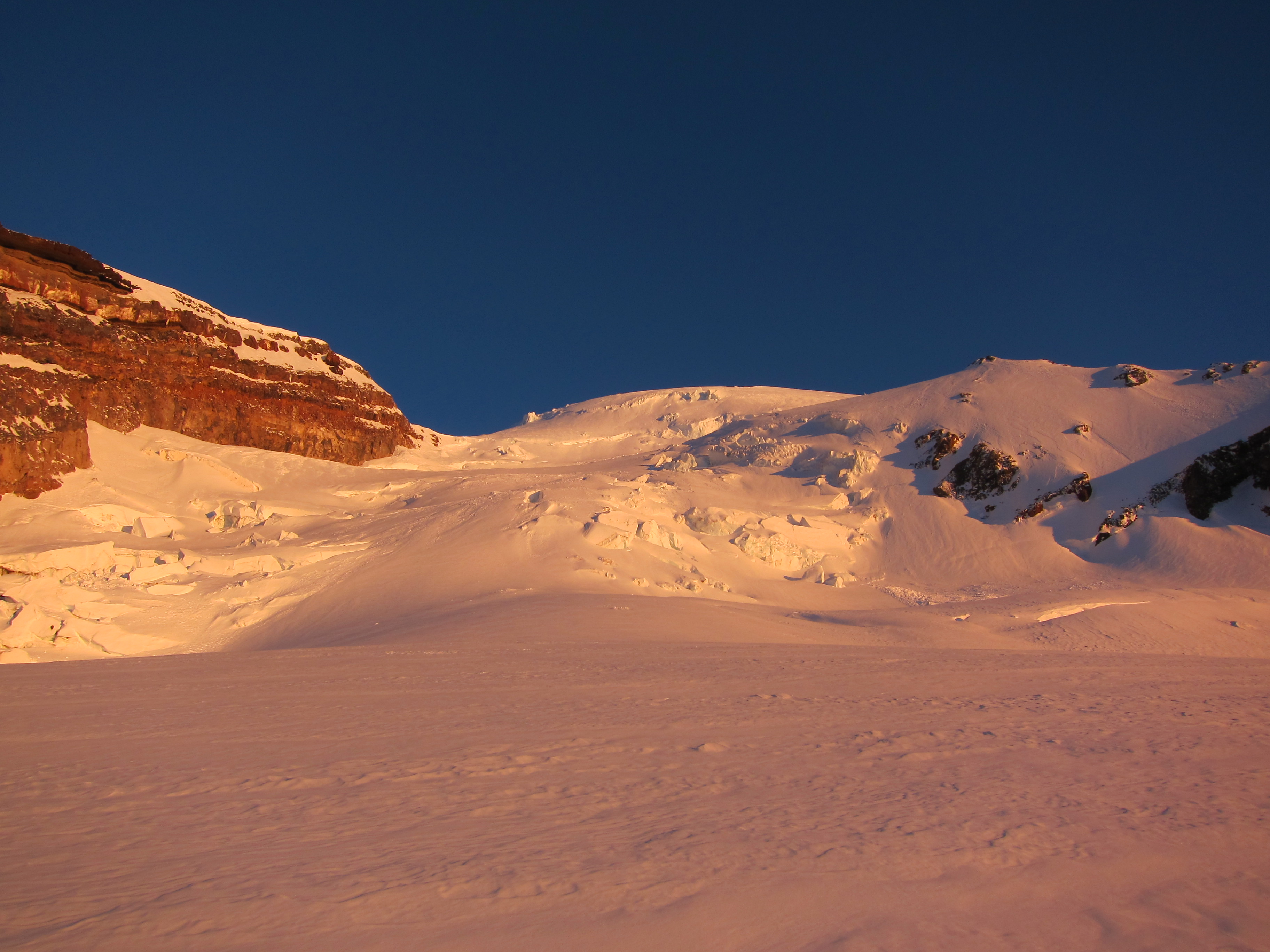
Sun rising on the Ingraham Direct, after the avalanche
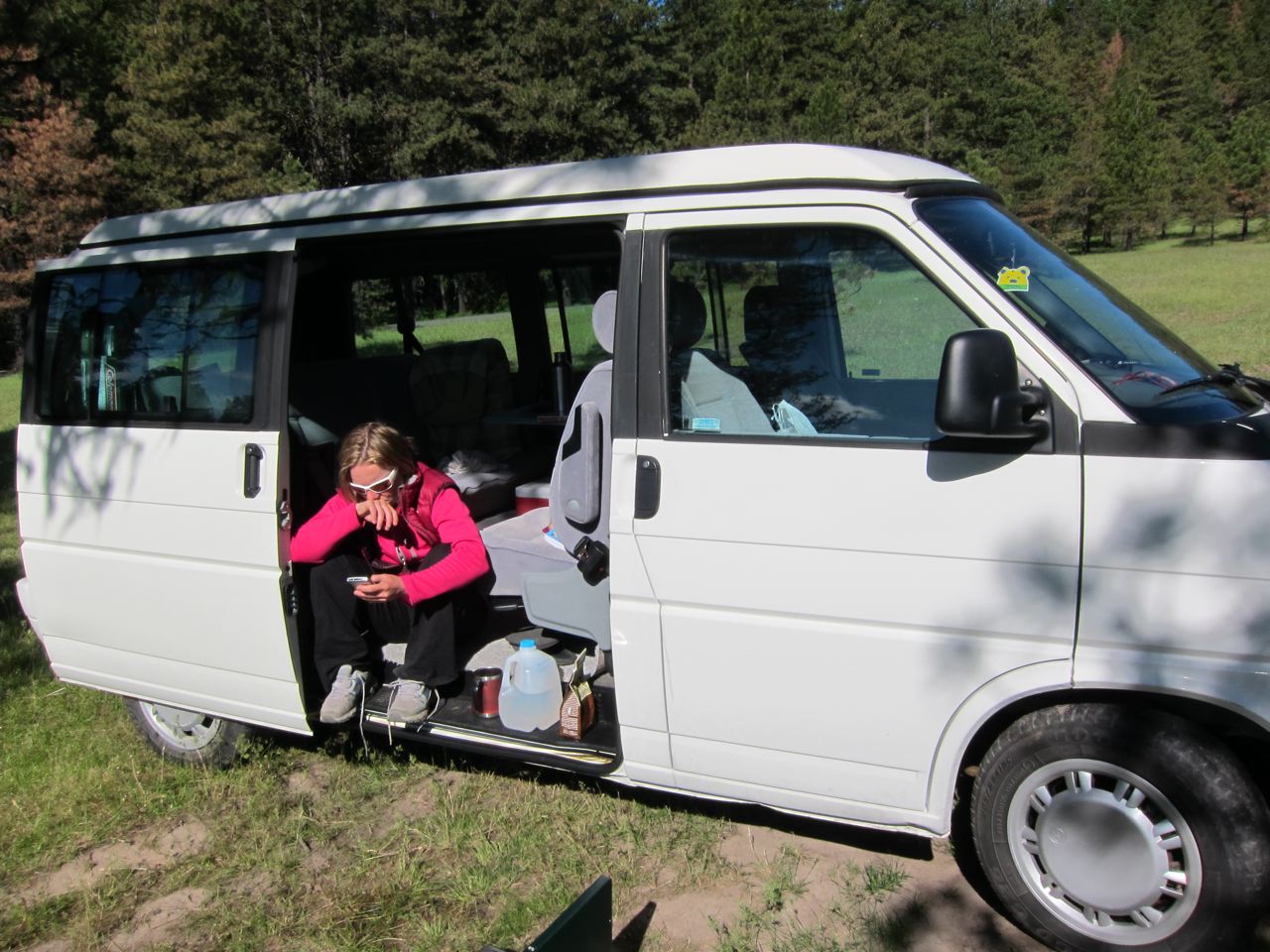
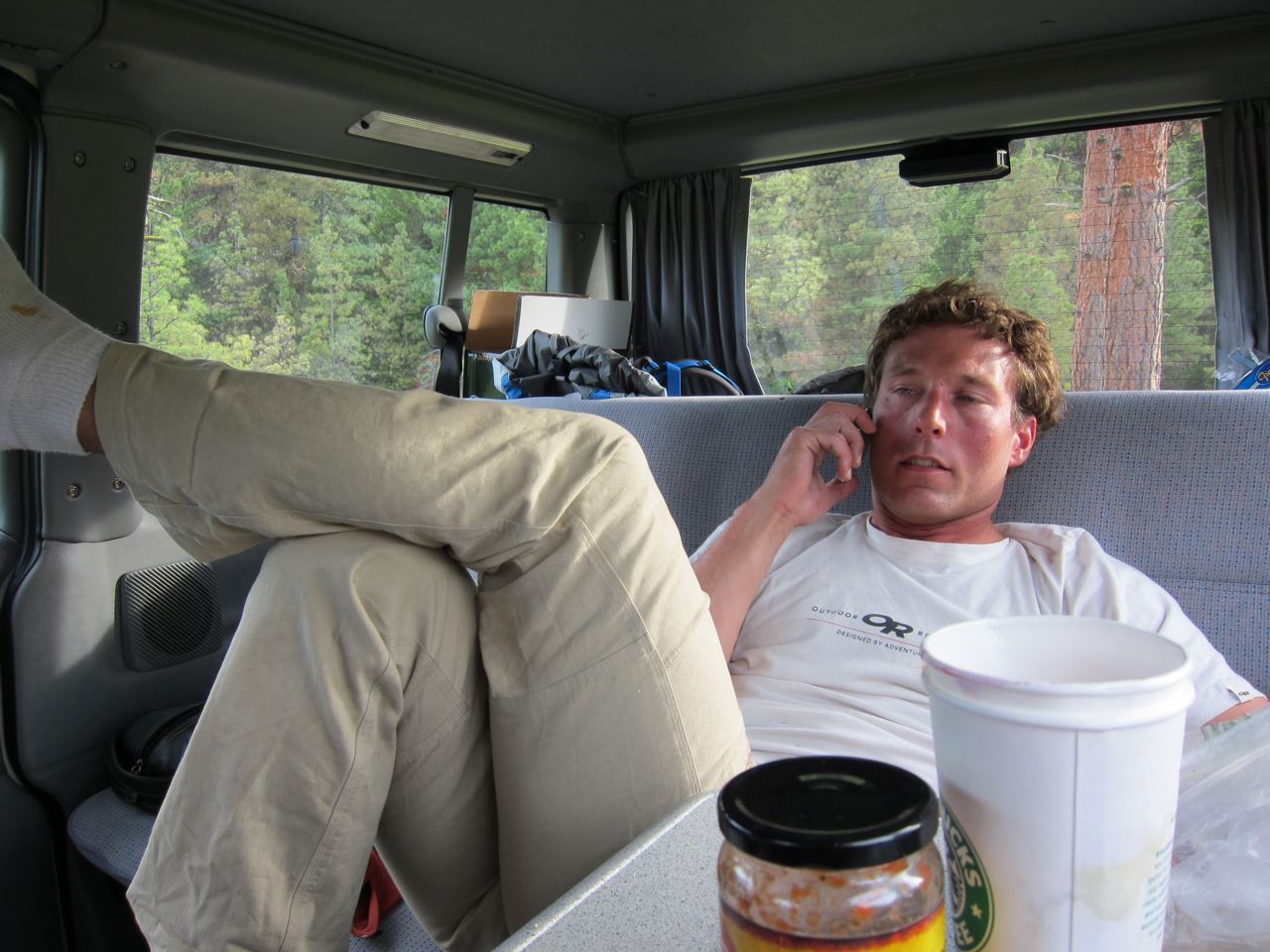
Recently, Adam and I decided to get a van to travel in. I guess, as you get older, comfort becomes more and more valuable, espacially when you spend so much time on the road. Sleeping in a tent gets a little old. We randomly found this super cheap VW van. I think the guy didn’t realize what he was selling, which we were happy about. I grew up travelling with my parents in these kinds of up-pop vans and loved it. I am so excited to experience that again.

The Honeycomb at Tieton 
Adam getting some laps in at Lava Point, Tieton During my stay, we tried Rainier three times. The first time, we got shut down my the avalanche. The second time, conditions were still too unstable on the mountain. But, as the saying goes, third time is the charm. We woke up to nice weather and decided to climb. We woke the clients up at midnight and headed out. By the time we hit the second rest break at the top of the Disappointment Cleaver, we were in a complete white out. But with a good track, reasonable temperature and little to no precip, we made it to the summit by 7.30am. It was nice to end the seaon up there with a summit of Mount Rainier!
Adam and I are spending the rest of the summer guiding in Europe. Stay tuned!
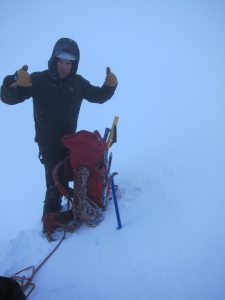
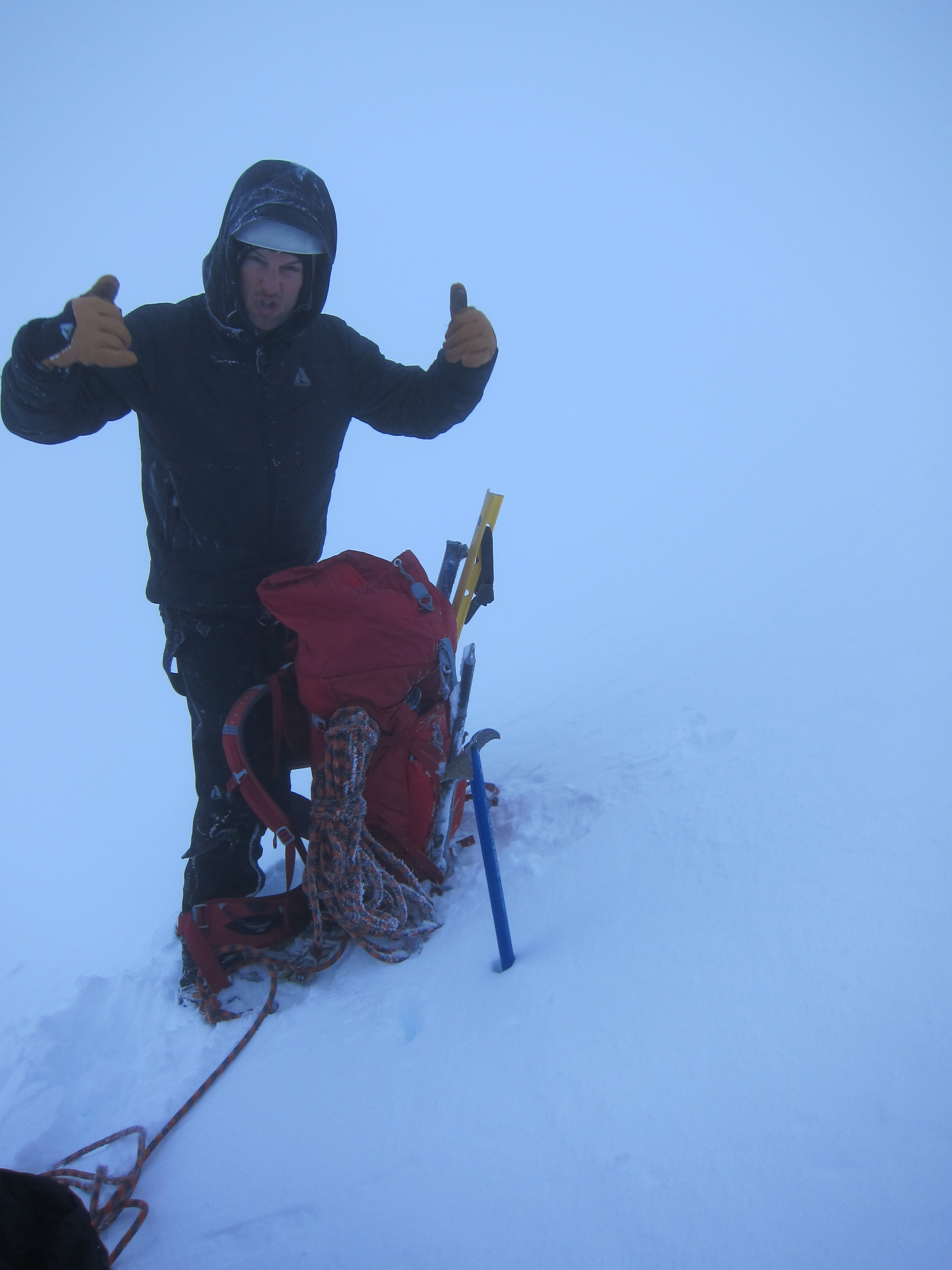
Guide Miles Clark psyched to be on the summit, despite winds, snow and no visibility 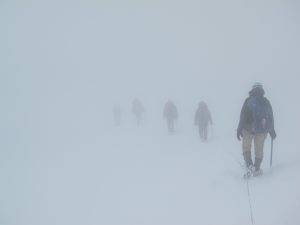


Ouray Ice Festival 2010

Five years ago, I got on a plane from Switzerland to come and compete in the world class Ouray Ice Festival (www.ourayicefestival.com). Little did I know how much this event would change my life. Upon arriving here, I drove to Telluride to climb the classic Ames Ice Hose, a striking WI5 three pitch line. While rappelling the route, I mistakingly dropped my ice axes, which almost took out the leader of the party below. I apologized, he forgave me and six months later, we were married. During the event, I also met photographer/climber Jon Walsh (www.alpinestyle.ca), whom I met that following march in Canada with the perspective of climbing many routes in a day. We would climb anywhere from 2 to 7 pitches in a day, linking up stunning lines such as Nemesis and Suffer Machine, Nightmare on Wolfestreet and French Reality, the Weeping Wall/Weeping Pillar and Curtain Call, etc. Later in the trip, we focused on putting up new lines. They were hard and full value and when all was done, I wanted more. This was the beginning of my passion for first ascents.
Audrey, Matt and Pat with their fancy rental car in Ouray
Two years ago, I was back for the third time at the Ouray Ice Festival. Sitting across from me at breakfast one morning was fellow Petzl athlete Audrey Gariepy – an amazingly talented Quebecer climber. I was reading an email from Jon Walsh suggesting we meet up in March again to do first ascents in the remote Canadian Icefall Brooke cirque (http://www.alpinist.com/doc/web08s/newswire-canadians-icefall-brook-mixed). I looked up and asked Audrey if she might be interested. She immediately said yes. We invited two other women to join us – Ines Papert and Jen Olsen. Two months later, we flew into the cirque and put up no less than 10 new routes in 10 days.
Since it had all started at the Ouray Ice Festival, it only made sense for me this year to present a slideshow of this amazing journey into the Canadian wilderness. Thursday night, the Main Street Theater in Ouray was more than packed to view Andres Marin and I’s slideshows. It was a blast. The crowd was excited and that made me all the more at ease to share this amazing journey into the wild. Since Ines Papert was in the audience, she agreed to talk about putting up what might be the hardest multipitch route in the world during that trip – an amazing feat that await a repetition to confirm the M12 rating. And thus started the 15th Annual Ouray Ice Festival – my 5th edition since I moved to the USA in 2006.
 Every year, I debate whether or not to compete in the event. Competing requires a lot of training and being a last minute kinda girl, I always end up feeling pretty stressed out about the upcoming competition. Sometime in november, I started hanging from my ice axes in the kids playground I have in my backyard in Salt Lake City. I would hang for 15 minutes at a time, doing pull ups with one foot resting on a bar, then shaking out before doing knee raises and kicking my foot as high as possible in the air to work the core. This year, I also went to France and climbed on huge overhanging routes that have been set up especially for dry-tooling. Route setters drilled and painted holes in the rock to place ice axes in and hung logs on the route as well. This was amazing training. Yet, as I flew home from spending Christmas in Europe, I started getting sick. I had intended to drive down early to Ouray for some last minute training and getting used to the style of climbing down in Ouray again. Instead, I was bed ridden for three and half days with strepthroat. When antibiotics finally started working their magic, I got out of bed to drive down to Ouray and pick up my friend Jasmin Caton
  on the way. Ironically, once I got on the rock, I felt the strongest I had ever felt and I got excited about competing again. Saturday morning, I got up early to warm up with Majka Burhardt. I was scheduled to climb at 10.40am on Saturday. I rapped down into the canyon a little before that and checked out the route once the previous competitor had fallen off. The route was long – 140ft – and overhanging, but it looked fun. Vince Anderson, the route setter, had decided on a sit start. I put my Nomics in the starting hole in the ice and started after the 3-2-1 count down. The little ice problem at the start felt easy. I was calm and really motivated. I clipped the second draw, put my tool on a piece of ice and as I lifted my other tool to make my next move, the ice hold my weight was now fully on broke, and I fell. And just like that, it was over. I didn’t even have time to realize what was happening. I lowered down and climbed the ice to get out of the canyon. Instantly, I looked for a partner to go climb with in the park. I was motivated and frustrated, and it proved to the perfect attitude I needed to redeem myself and send my little project: Mighty Aphrodite (M9).

 Photos courtesy of James Q Martin
 Josh Wharton won the competition for the man and Ines Papert won for the women. While the competition was happening, multiple ice climbing and paragliding world champion Will Gadd was climbing as many pitches as he could during a 24hours period to raise money for the Dzi Foundation. Check out www.endlessascent.com to learn more about Will’s incredible feat!
The rest of the event was spent teaching clinics and meeting people from All over who share the same passion for ice climbing. Audrey and I taught Advanced Ice and Advanced Mixed climbing together one day and then I taught a beginner’s class solo. The Ouray Ice Festival is an amazing time to learn from professionals. Clinics always fill out so it’s important to sign up early. The Ouray Ice Festival also hosts the best party. This year, Petzl hosted the outrageous Super Hero- Guy Lacelle party, which raised 4000$ for the Ice Park. People were dressed in Wonder Woman, The Incredible Hulk, Men in Black, Batman and Robin, Superman and many others!
The 15th Annual Ouray Ice Festival was a great success. Beyond the competition, the outrageous party, the avalanche of great slideshows and the clinics, this edition was also a great occasion for the climbing tribe to reunite and celebrate those who have left us too soon. I already look forward to taking part in the 16th Annucal Ouray Ice Festival!
First Ascent Tent at the Ouray Ice Festival
Post Ice Festival Ames Ice Hose Climbing with Andrew Burr and Ines Papert


Trinity Right
 This Fall, I set my eyes on a 12a trad route in Little Cottonwood Canyon: Trinity Right. I had followed it once last year to clean it after Adam had sent it. The route traverses so much that it even goes down a little and I was terrified following it. The potential for pendulums is what scared me.
 Early November, it was a little cold to go climbing in Little Cottonwood Canyon’s shady Green A Gully. Yet, with a few layers of down jackets on, the climbing was perfect. Granite can be really slippery when it’s a little too warm. On day 1, I had followed Adam’s lead to clean it again. It felt like I would need quite a few days to work the route and figure it out. The following day, Adam led the route first and I then led it clipping the preplaced gear and trying to work out the moves. I just couldn’t figure out the first move on the traverse. Maybe I was scared to “go for it” on such small gear – and the only gear above the ground. Adam was patient. Finally, I realized that if I placed my feet way higher on a far left foothold, I could use that tiny undercling that was giving me so much trouble. Next, I had to figure out the powerful layback, which had seemed so hard at first with the lack of footholds. Yet, seeing Adam climbing it, I saw that you could use the left crack for both feet and fingers. Eventually, after hanging to fiddle with with some gear, I committed to the right crack and made it up to the much welcome rest. The thin undercling holds that followed which had seemed so impossible the day before suddenly felt really solid. I stayed with it and made it to the chains. Now, I had to put all the sections together. We cleaned the route and I got right back on it. And sent on the next try. That same day! I was all the more psyched that I have only climbed a handful of times in LCC and am therefore not very familiar with this style of climbing.
The route that I thought would be my Fall project and would take me many tries came to me way quicker than I ever thought it would. I was really excited and motivated for more. Yet, winter took over the next day, leaving with me many dreams of other routes in my backyard for next year!
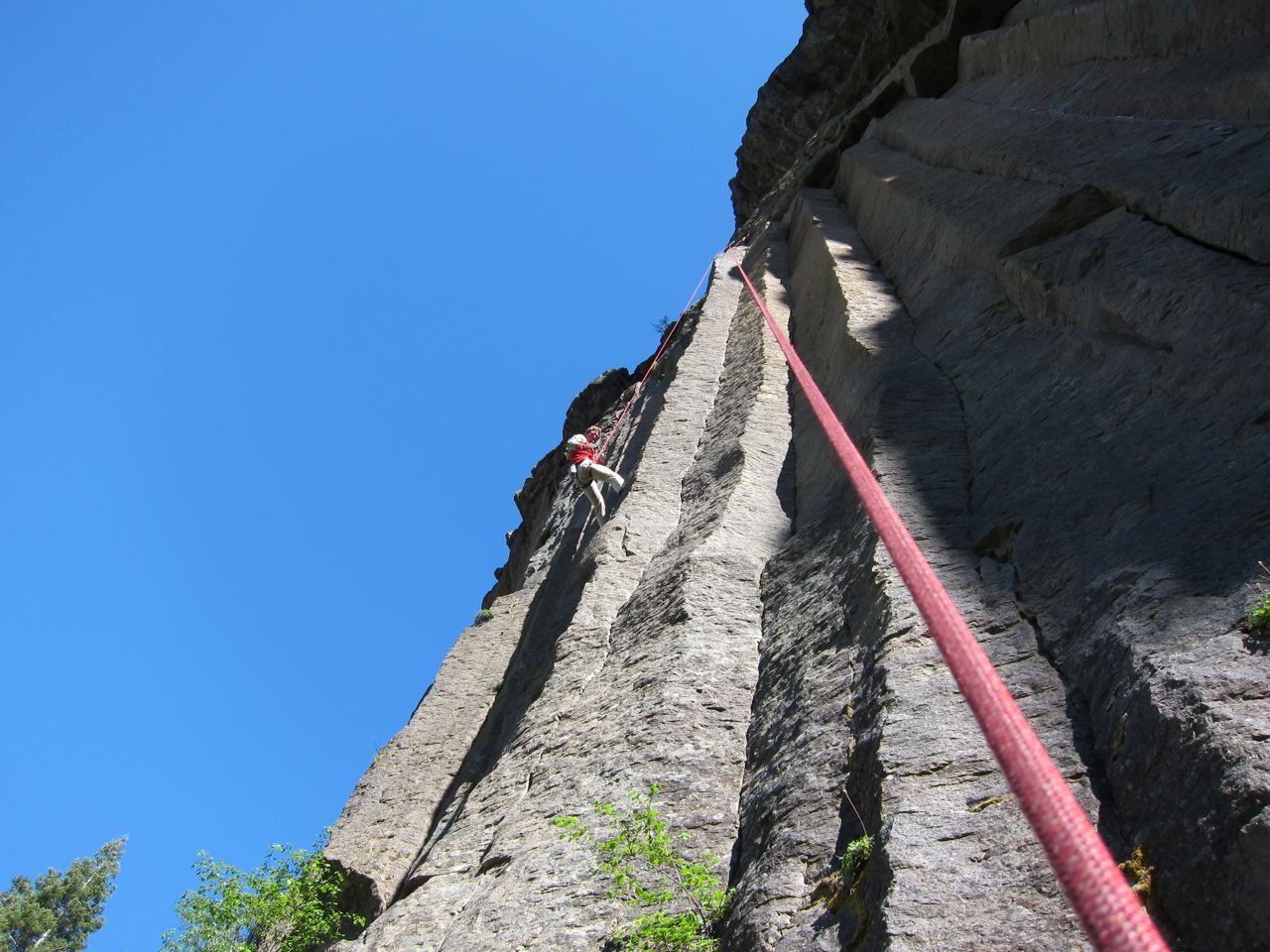
PS: am not the one on the pictures!!!