5 Day Dolomite Climbing trip
The Dolomites is about as spectacular a venue as you could imagine. The history, the culture, the food mind boggling amount of limestone all come to provide one of the best climbing destinations on the globe. There is literally something for everyone in the Dolomites, whether want to explore the via ferattas with your family, if you just starting to climb or if you are a seasoned climber, you will not be disappointed. Our Dolomites programs are set up on an individual basis depending on your skills and ambitions. However, below is a suggested itinerary that provides a great sampling of everything the Dolomites has to offer. Please contact us to customize a trip that fits your schedule and your desires. From our home in Switzerland, the Dolomites is about 7hrs away so it is possible to coordinate logistics and we could pick you up in Milan or Venice on the way, which would eleviate the need for a rental car.
Skills and fitness: There really is something for everyone in the Dolomites so as long as you are adventurous and motivated you are bound to have a great time.
Time of Year: The climbing season begins in late June and runs until mid September. July and August is the prime time, but it is also busy. The early and late season is less crowded, but afternoon thunder storms can be replaced by snow showers. The Dolomites region is so vast however, we can almost always escape to better weather if need be.
Itinerary:
Day 1-3: For these initial days we will base out of Cortina and do day trips while staying in town during the evening. These trips could take us to the tres Cima area, cinquo torres or perhaps the Tofana del Rosa…
Day 4,5: For the next two days we will plan to stay at a hut. Now, the term “hut” is used very liberally here as some of the huts rival hotels in many parts of the world. A good option could be the Sella pass region, where there are many long routes in a beautiful setting all within a 30 min walk from the road.
Cost*: 2400$ per person based on a 2:1 ratio.
Includes:
-
- 6 nights lodging
-
- Transportation in the region
- All guide fees and expenses
*This is an estimated cost based on 6 days of guiding, lodging and transportation from Venice or Milan. Actual costs will need to be verified upon booking
Ski Touring Lofoten, Norway
LOFOTEN SKI TOURING
Lofoten is a little piece of heaven located on the artic circle in northern Norway. This archipelago feels like an island of its own, stretching west into the Norwegian sea with jagged peaks rising straight out of the ocean and offering world-class terrain for every level of skier. There is something so enchanting about putting skis on with the sound of breaking waves in the background and scent of ocean filling your nostrils. With each step, the scenery changes, the fjords become more defined, the contrast between the ocean and the mountains deepens, until you reach the summit with the views stretching to the ocean on each side, offering some of the most breathtaking landscapes I have ever got to experience. But the icing on the cake might just be skiing back down to the ocean and feeling a deep sense of balance with the opposing energies offered by the mountains and the oceans, the yin and yang of nature.

This is the perfect ski holiday with unlimited potential for ski touring, relaxing, sauna, great food and also visiting beautiful typical Norwegian towns and landscapes!
Lodging & Food:
We will be staying at the Lofoten Ski Lodge in Kabelvag, which is located right on the water and offers beautiful and typical shared cabins. We are offering 3 group dinners during the trip. On other nights we will have the option to eat together or people can be on their own program.
Weather days:
Bad weather is part of the experience in the mountains and in Lofoten, the weather can come as quickly as it can leave. So we will go out everyday, rain or shine and if we decide to cut the day short, we will have options to visit the beautiful town of Henningsvaer with its surprising cod fish racks, its harbour, the best coffee shop on the island and its classic Kannelbullar (Cinnamon buns) and its cute little shops, stroll around Svolvaer, enjoy a massage, go surfing in the cold sea or just rest in your cabin, listening to the gentle waves below.
Cost: the trip runs with a minimum of 4 people
6 people: 2950.- per person
5 people: 3540.- per person
4 people: 4425.- per person
What the trip includes:
- 2 travel days (April 3 & 10)
- 6 guided days
- Lodging in private cabin with shared double rooms, breakfast buffet, self packed lunches, after ski waffles, all tea/coffee/juice, 2 course dinner buffet, access to sauna and hot tub, drying room, ski rental shop, and more
- Meals: breakfast buffet, self packed lunches, after ski waffles, dinner, tea, coffee, juice
- Transportation in Norway
What’s NOT included:
- Flights
- Gear rental (if required)
- Boat hire: weather and condition dependent, there might be the option of ski touring from a boat. The boat ride is not included
- Alcoholic drinks
Extra:
- Possibility to do yoga and get a massage from The Shala Lofoten
- Rental Gear: The lodge has a full run of rental equipment. For the 2020, they have the following rental packages: Ski Package – Includes Volkl VTA 98 touring skis with Marker Kingpin or Tour bindings, skins, and adjustable ski poles. Price is 300 Nok per day. Safety Package – Includes BCA Tracker transceiver, shovel, and probe. Price is 200 Nok per day. Full Rental Package – Includes both the Ski and Safety Package. Price is 500 Nok per day. Any individual item can be rented at the price of 100 Nok per day. We do not rent Ski Touring Boots so please bring your own boots. We recommend testing and getting your boots fit by a professional boot fitter if poss
Flights:
Flight option to Svolvaer or to Evenes, which adds a 2.5/3 hour drive upon arrival. It is important we all arrive in Evenes at the same time!
6 Day Mont Blanc Climb
June and September 2017
At nearly 16,000 ft in elevation, Mont Blanc is the highest point in Western Europe. It attracts climbers from all over the world as it dominates the skyline above the Chamonix, FR. While Mont Blanc is not overly technical, it is a mountain not to be underestimated. It requires a high level of fitness and the altitude requires climbers to be well acclimitized. Furthermore, due to warmer than average summers, summertime conditions can be unreliable and down right dangerous. For this reason , we offer this trip only in the early and late season. June and September tend to have cooler temperatures and more snow, making for safer conditions. Typically there are less people on the mountain during this time as well allowing for a more enjoyable experience.
Skills and Fitness: The main challenge for Mont Blanc is the altitude and overall effort required. You should be prepared to do a 1,600m, (5,000ft+) summit day at altitude. This summit day takes around 10-12hrs, so having all day endurance is essential. The climb also involves some exposed ridges and some rock scrambling. While these skills should not be underestimated, a high technical standard is not required. While not required, we do encourage people signing up for this trip to have previous mountaineering experience. Please contact us if you have concerns regarding your fitness or skill level for this climb.
Itinerary:
Day 1: This is an acclimitization day and we will head up to the famous Aiguille du Midi (12,600ft) to get to some thin air. From here we will traverse to the Italian side, covering roped travel and crampon skills. From here we will take the lift back and spend the night in town.
Day 2: We will start the day with another lift ride and we will head again to the Italian side. From here we will do a slightly more technical climb, getting practice on some mixed terrain and continuing the acclimitize. We will spend a night at a hut.
Day 3: With an early start we will aim to climb the Tour Ronde. This will test our fitness along with the skills we have acquired during the first couple of days. We will descend back to town, via lifts, following the climb
Day 4: After a leisurely start, we will take a lift and train to begin our hike to the Tete Rousse hut on Mont Blanc. This hike takes about 2.5 hours and allows us time for ample rest before a long summit day the following day.
Day 5: In a perfect world, this is our summit day. We will start before dawn making our way up the Gouter ridge, dome du Gouter and finally the arete des boss to the summit. This is a long climb and takes around 7hours for the climb. After the summit, we will descend down the Gouter Hut at 3,800m, which we passed on the way up.
Day 6: Following a civilized start around 7am, we will continue our descent down the mountain and make our way back to town.
* It might be necessary to change the order of our summit days due to weather. This itinerary offers the most flexibility and theoretically gives us 2 summit days
Cost: $3,600 per person based on a 2:1 client to guide ratio, $5,350 for 1:1 climb
Includes:
All lift passes for the week
7 nights lodging in huts or hotels (twin or double rooms at hotels)
All guide fees and guide expenses
Does NOT include:
Travel to and from Chamonix
In town meals
Drinks at huts
Important: Mont Blanc, while accessible, can be a very serious mountain. We will not attempt the climb with people who do not have the appropriate level of fitness or skill. Furthermore, bad weather or conditions may also cause us to change or cancel the itinerary. If this is the case, we will find suitable alternatives, which may include ascents of other 4000m peaks in the region.
5 Day Eiger Climb
Eiger Climb
There are few mountains that have such a reputation as the Eiger. Rising above Grindelwald in the Bernese Oberland region of Switzerland, the Eiger is a dramatic and stunning mountain. The North Face dominates the view from town and rises over 5,000ft. Our goal for this program is to ascend the Mitteleggi ridge, which follows the left-hand skyline as viewed from town. We will do this ascent over two days. We start the climb by taking a train and accessing the south side of the mountain via a tunnel! From here we make our way to the Mitteleggi hut, where we will spend the night. The summit climb involves 800m of exposed technical climbing and ridge traversing to reach the summit. As always, the summit is only half way, but on the Eiger our day is far from over. The descent is technical and demanding and we continue with some climbing as we make our way back to the Jungfraujoch station and catch the train back down.
Time of Year: The best time for the Eiger is from late July to early September with August being the prime season. While the mountain can get crowded in the peak season, it is not nearly as chaotic as the Matterhorn. However, the hut is much smaller so reservations can be challenging, plan in advance!
Skill and Fitness: The Eiger climb is very similar to the Matterhorn in technical difficulties, but it more committing and there are more sections involving exposed ridges. To be eligible for the climb, you need to have a high level of cardio fitness and be able to move comfortably and efficiently in exposed terrain. The hardest sections, will have fixed ropes, but we will be climbing up to 5.6 in mountain boots. Experience with crampons on steep snow and ice is also required.
Itinerary:
Day1: Meet in Grindelwald, take the train to the Eigergletcher station where we will do a multi-pitch rock climb getting some practice and assessment climbing in boots. Return to Grindelwald to spend the night
Day2: We will again take to the Jungfraujoch station. From here we will climb the Monch a 4000m peak giving us practice using the crampons in some mixed and exposed terrain. We will stay at the Monchjochhutte for the evening.
Day3: With an early start we will climb the Jungfrau, another 4000m peak. This offers more practice with the crampons and moving together while roped up. We will stay back in town.
Day4: After a leisurely start we will take the train and start the Eiger climb.
Day5: Eiger summit climb
Cost:* 5,400 Swiss francs one person, 4,400chf two people (For 2 person climbs, the training will be done as a 2:1 ratio and the summit climb will be done as a 1:1 ratio
Includes: 4 hotel nights, 2 hut nights
Lift and train rides for the week*
All guide expenses and fees
Does NOT include:
In town meals, lunches on the mountain
Travel to and from Grindelwald
*This price assumes all participants have a Swiss ½ fare rail pass. If not, you will be responsible to pay the difference in fare.
Important: The Eiger, while accessible, is a serious climb. It requires moving, while roped together, in very exposed terrain. While traditional belays will be used in places, much of the climb is done in a “short” rope style. Because of this, if your skills are not appropriate for the mountain, we will find another suitable objective. This decision will be based on your performance during the first prep days. Also, if conditions or weather on the mountain are not good for our summit climb, we will find a suitable objective. There are many objectives in the region and we may need to change the itinerary to suite the weather and conditions. Keep in mind that safety is our primary goal for this trip!
5 day Matterhorn Climb
Mid-July to Mid-September 2017
The Matterhorn is likely the most iconic mountain in Europe, quite possibly, the world. It rises dramatically above Zermatt, a small Swiss mountain town. While the peak is incredibly scenic, what is even more impressive is you don’t need to be a hard core climber to stand on the summit. Now, don’t get me wrong, climbing the Matterhorn should not be taken lightly, but it is within reach of many adventurous outdoors people. Every year we guide this climb and below is a list of what is required to sign up for an ascent.
Skills and Fitness: To climb the Matterhorn safely, you need to have a high level of fitness and be comfortable moving in exposed terrain. The climb covers 1200m (4,000ft) of elevation gain and then we descend down the same way. The climb should take 8-9 hours round trip. The terrain is exposed from start to finish and we will be roped together for the entire climb. The climb itself involves mostly 4th class terrain with some short sections of 5th class climbing, which would be around 5.6. Keep in mind, we will be wearing boots for the entire climb and, if conditions warrant, crampons as well. On the steepest sections, there are fixed ropes in place and we will use these to speed things along
Time of year: The best time to climb the Matterhorn is normally from late July to early September and we can set up climbs any time during this period. August often yields good results, but it can be a busy time on the mountain. Earlier and later in the season can offer great conditions and low crowds, but there is more risk that snows could keep the mountain out of condition.
Itinerary:
Day 1: Meet in Zermatt, take the Gornograt train up to the Rifflehorn where we will spend the day rock climbing in boots. This will give us a chance to evaluate people skill level and give you a sense of what to expect on the mountain.
Day 2: With an early start we will take the main cable car above Zermatt to the Klein Matterhorn station. From here we will traverse the Britehorn plateau and traverse our way back along the East ridge of the Britehorn. This is one of the nicest ridge climbs in the area and offers great practice using crampons and moving in exposed terrain. Not to mention, the views are amazing!
Day 3: With a leisurely start, we will take a lift and then hike up to the Hornli Hut. This is about a 2 hour hike from the lift.
Day 4: It’s time for an Alpine start! With a 4am departure we will set off for the summit. This is a long and demanding day, but totally worth the effort. Keeping with our time schedule, we should be back by early afternoon where we’ll have a chance to recover, eat some lunch, repack and make our way down to catch the lift back to town.
Day 5: This is an extra day that may get used as a weather day, to do an extra day of skills practice or perhaps to do a via Ferratta or some more rock climbing after a successful summit.
Cost:* 6000 (swiss francs) for one client 4,550 for two (The summit climb will be done as a 1:1 ratio, but the first two training days will be done as a 2:1 ratio. This price also reflects a shared room if booked with two people).
Includes:
- 5 Hotel nights (shared twin or double room with two guests)
- 1 night at Hornli Hut with breakfast and dinner
- Lifts during the week*
- All guide fees and guide expenses
Does NOT include:
- Travel to and from Zermatt
- In town meals
- Drinks at huts
* This price assumes guests have a 1/2 fare Swiss rail pass, if not the difference in ticket price will be in addition to the cost
Important:
The Matterhorn, which accessible, is a serious climb. It requires moving, while roped together, in very exposed terrain. While traditional belays will be used in places, much of the climb is done in a “short” rope style. This allows us to do the ascent efficiently and be off the mountain before afternoon, clouds or storms roll in. However, because of this, if your skills are not appropriate for the mountain, we will find another suitable objective. This decision will be based on your performance during the first two prep days. Also, if conditions or weather on the mountain are not good for our summit days, again, we will find a suitable objective. Keep in mind that safety is our primary goal for this trip!
Verbier Ski Week
Verbier Ski Week
When:
March 2-7th, 2021
(Please contact us about arranging other weeks to fit your schedule)
Where: We will run these trips in Verbier and the “4 vallee” resorts. Verbier can be reached easily from Geneva airport via the Swiss rail system or a private or shared transfer. Allow about two and a half hours from the airport to arrive in Le Chable where accommodation will be provided. Le Chable is a 10 minute gondola ride from the town center of Verbier and there are restaurants within walking distance to the hotel. The gondola runs until 7:30 in the evening allowing you to profit from some après ski in Verbier itself. It is also possible to arrange a taxi if you want to stay later in Verbier.
What: In our opinion Verbier offers the best off-piste and resort accessed ski touring in the Western Alps. From the hotel, the lift is a short 5 minute walk, which gives you access to 4 different resorts and a seemingly unlimited number of runs, both in and out of the resort bounds. Our plan will be to chase the best conditions during the five days while exploring the different resorts.
Who: Anyone with an intermediate level of skiing is suitable for this trip. While not necessary, it is best to have some touring experience or be open to doing short hikes, which will help find some untracked snow. Touring gear can be rented locally and there are tours suitable for any level. Ideally, all the group members will have a similar level of skiing experience and we can help organize this depending on signups. The best is to try and sign up with a group of friends or family where you know everyone’s abilities. The trip is designed to run as a 4:1 client/guide ratio, but these numbers can be changed to accommodate different group sizes. The price of the trip will change if the ratio changes, so please contact us to discuss a larger or smaller group.
Trip Cost: $1950
What the trip includes:
- 6 nights at the hotel l’Alarze ( http://alarze.ch/) in Le Chable, including breakfast
- A five day lift pass for the “4 vallees”
- 5 days skiing with an IFMGA mountain guide
- Avalanche safety gear: beacon, shovel, probe and backpack. We do not supply or rent “airbag” avalanche packs, but they can be hired at local shops.
What is NOT Included:
- Travel to and From Le Chable from the airport
- Lunches on the mountain and dinners in town
- Rescue insurance
Haute Route
The Haute Route – The High Road – is arguably one of the most famous and magnificent ski traverses in the world. During the 6 days it takes to travel on skis from Chamonix to Zermatt, you will be immersed in the world of the high mountains: skiing on glaciers surrounded by dramatic 4000m peaks during the day, and enjoying the comfort of mountain huts after a long day out.
Trip description
Day 1: This is an assessement day to make sure everyone is up to speed for the upcoming week. We will get a feel for the groups fitness, skiing ability (uphill and downhill) and cover skills like skiing on a glacier and avalanche rescue. Ideally we will ski the Valle Blanche, a ledgendary glacial decent above Chamoinx. However, if the weather is not cooperative we may spend the day at the Grands Montets. Lodging: Chamonix
Day 2: We will begin by taking the lifts up the Grands Montets and skiing down to the Argentiere glacier. From here, we will skin up to the col du Chardonnet, before dropping onto the Saleinaz glacier, which is our entrance into Switzerland. Another skin takes us to the Fenetre de Saleinaz, which leads to the Trient glacier. From there, we will traverse to the Trient Hut. Lodging: Trient Hut
Day 3: Ski down to the Col des Ecandies, after a quick climb we arrive at the Val d’Arpette, which we ski to Champex. We will then travel by taxi to Verbier. Depending on conditions and the group, we will spend the afternoon exploring the Verbier resort or lounging in the sun at the Cabane Mont Fort, where we will spend the night.
Day 4: We start by skinning to the Col de la Chaux. From here we immerse ourselves again in the world of glaciers and high peaks. We will summit the Rosablanche before skiing down to the Prafleuri Hut. Loding: Prafleuri Hut
Day 5: The day starts with a short skin up to the Col des Roux before the long traverse above the Lac des Dix. A steep climb up the Pas du Chat takes us into the Dix valley with stunning views on the Mont Blanc de Cheilon. Lodging: Dix Hut
Day 6: The last two days offer some of the most spectacular touring and scenery of the entire week and in the Alps for that matter. The skin up to the Pigne d’Arolla travels through a maze of crevasses and rugged terrain. After a last steep section, we will traverse a high glaciated plateau to reach the summit of the Pigne d’Arolla – the highest point on the Haute Route at around 3,800m – which offers mindblowing views over the Alps and the surrounding 4000m peaks. After taking it all in, we will ski down to the Vignettes Hut.
Day 7: Last, but not least… we have three cols to traverse and a lot of distance to cover before the long ski down to Zermatt: the Col de l’Eveque, the Col Brule and the Col de Valpelline. Once we reach the last col, the mighty Matterhorn reveals itself in the most majestic way and we will get to ski with this jaw-dropping view all the way down to Zermatt!
Fitness level: You should be able to skin uphill 5,000/ft a day for 5 consecutive days over 6-8hrs during the day.
Skiing ability: Strong advanced-intermediate skier in backcountry or off-piste terrain (power snow, breakable crust, icy slopes and the unavoidable crud…). Also, comfortable skinning in exposed terrain and executing kick-turns on steep firm slopes is required.
Price: $2,750 per-person based on a 4:1 ratio
Includes:
- 3 nights hotel lodging (2 prior to trip and one at the end) based on double occupancy
- 5 hut nights, demi-pension (includes breakfast and dinner)
- Taxi service from Champex to Le Chable and luggage transfer from Chamonix to Zermatt
- Lift tickets (one multi-pass ticket in Chamonix, one single ride at the Grand Montet, one single ride at Verbier to access Mont Fort
- All guides fees and expenses
Does NOT include:
- Drinks and huts (including water, which most of the time needs to be purchased seperately)
- Trip insurance or rescue insurance
- Travel to Chamonix prior to trip and travel from Zermatt at the end
- Gear rentals
IMPORTANT: This ski tour is in high mountain glaciated terrain and we expect all of our guests to have a certain level of competency in both up and downhill skiing. This is both for individual, as well as, group safety. Because of this, we reserve the right to prevent someone’s participation on the tour if we feel they are not capable of the itinerary. We cannot offer refunds if you show up for a trip and are unable to participate due to your skiing ability or fitness level. If you are concerned of your ability please feel free to contact us directly so we can discuss this one on one. Furthermore, if the weather prevents us from completing our proposed itinerary we will do our best to find suitable alternatives. Because we are very familiar with this region of the Alps, we are confident we can make the best out of any situation. However, some itinerary changes will incur additional costs.
CUSTOMIZE: As a small guide service we pride ourselves on being able to fit your needs. If these dates don’t work for your schedule please contact us to arrange something that will. Also, there are many variations for the Haute Route and if you are coming with a lot of skiing and touring experience we can help arrange something that offers a challenge for anyone. We know this region well and have both completed the Haute Route in one day… so, let us know if you want us to put together something else that suits you best!
Ski Japan January 2018
 WHY?
WHY?
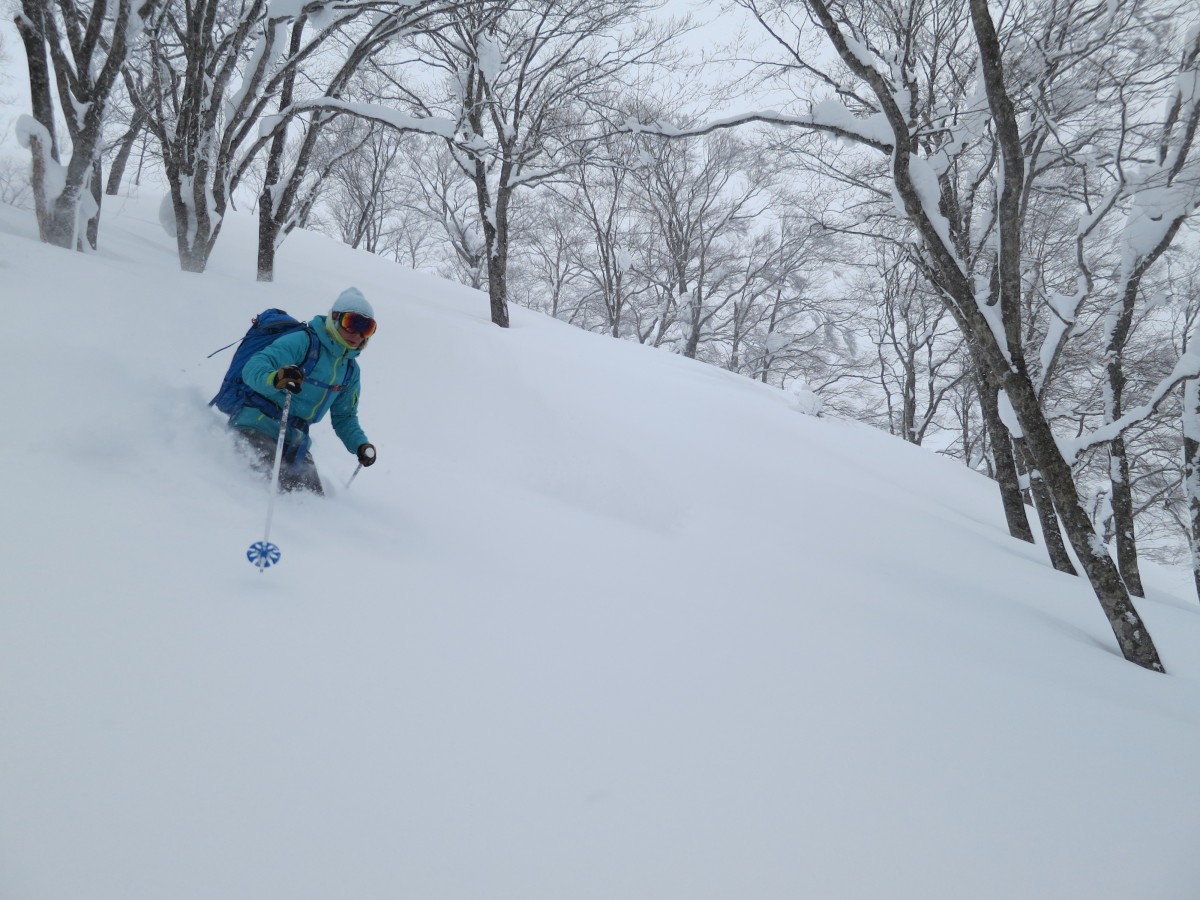
Japan offers some of the best snow on earth: it’s light, it’s fluffy and there is a ton of it! The Japanese mountains have more precipitation in a season than most places in the world. In 2015, there was a cumulative of 12meters of snow by February and they were having to shovel the snow from under the chairlifts to keep them in service. Hakuba, where our trips are based, offers a unique blend of big Alpine terrain and sheltered trees. This allows for skiing in all conditions; big alpine runs when the sun is out and amazing tree skiing when it snows.
Aside from the skiing, Japan offers a great cultural experience. Whether it is eating fresh sushi, soaking in the Onsens after a long day of skiing or searching for snow monkeys while ski touring through the trees, your bound to experience something unique and memorable in the “land of the rising sun.”
WHERE?
 Our trip will be based in Hakuba, located in the Nagano prefecture and home to the winter Olympic Games in 1998. It is located about 3.5hours Northwest of Tokyo and is easily accessed by train and bus service. Hakuba is home to several ski resorts that provide access to amazing terrain both in and out of the resort. The town itself is similar most Western style ski resorts offering all amenities, from hotels to restaurants, shops and grocery store, banks, post offices, etc.
WHEN?
Our plan is to offer two weeks of guided skiing and adventure in January 2016. The ski week will run M onday thru Friday as to allow travel on the weekends.
- January 10-16
- January 17-23
If you are interested in other dates or would like to add an additional day of skiing please contact us.
WHAT to Expect?
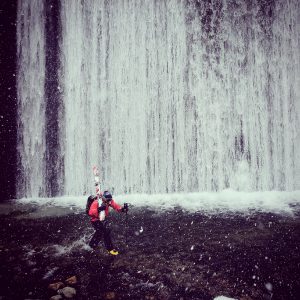 Caroline and Adam traveled to Hakuba in February 2015 and enjoyed an amazing week of skiing and adventure. Our intention is to share this experience with our guests in 2016! Due to the nature of the terrain, we will almost always start by taking lifts from a resort and begin our tours from here. However, depending on conditions, we may also spend some time skiing resorts if powder is easy to get. There is a variety of terrain around Hakuba, from tree skiing to alpine terrain and the area is suitable for skiers of all levels from beginner to expert. This variety of terrain also allows us to ski in almost any weather. In our experience, the skiing around Hakuba could be loosely compared with skiing in the Wastach backcountry in Utah. Because we use lifts to access most tours, there is no need to have an Olympic level of fitness to enjoy this amazing environment. Nonetheless, a moderate level of fitness along with prior ski touring experience should be considered a prerequisite for this trip. If you have questions regarding your ski/touring ability or fitness level please feel free to contact us directly.
We have chosen to stay at the Hakuba Powder Lodge for this trip. This is a friendly and well located lodge and, like most things in Japan, clean and tidy. The lodge offers a relaxed, friendly atmosphere with enthusiastic skiers, but don’t expect five star hotel accommodation. If you would prefer more luxury accommodation please contact us for suggestions and we are happy to help arrange other lodging if need be.
COSTS:
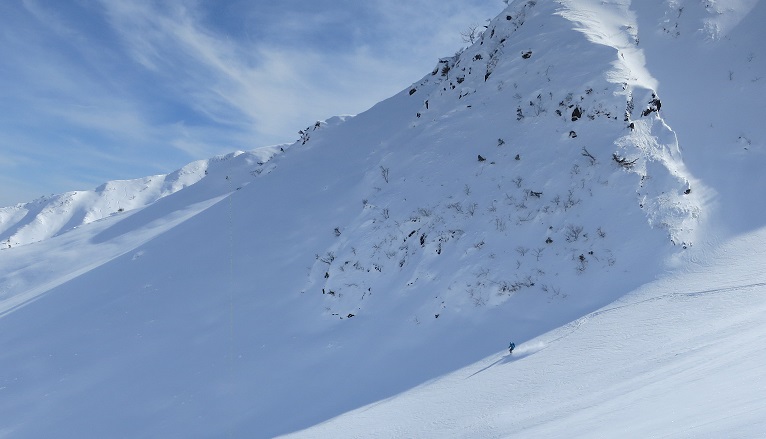
The trip cost per person is $2,500 based on a 4:1 client to guide ratio. Smaller or larger groups are possible, but will change the trip price. Please contact us for details if you have a larger or smaller group.
What is Included:
The trip cost will include the following:
- Guide fees and expenses with an IFMGA mountain guide
- Lift passes for the week as needed
- Transportation for the week and taxi fares as needed
- 6 nights lodging (Sun – Fri) at the Hakuba Powder Lodge
The trip costs does Not include: travel to and from Hakuba, rescue/trip insurance, food and drinks during the week.
LOGISTICS:
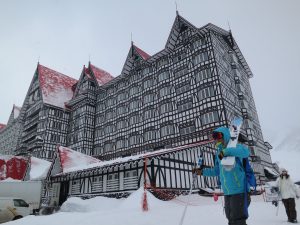 From Tokyo Narita airport it takes about 3-5hrs to travel to Hakuba via public transportation. You travel to Nagano directly via train and continue to Hakabu by bus or shuttle. There are also some services that provide direct transport from the airport to Hakuba that may be practical for groups traveling together. Also, it is possible to have skis and luggage sent over night to Hakuba at a reasonable fee, which avoids traveling on the train with lots of baggage. When booking a trip we can provide precise details on travel to Hakuba.
Book today for a trip of a lifetime
Booking deadline: September 1,2017
David Jensen, Vermont
I was a client on this epic trip last week. Four days of amazing touring in Chamonix topped off with an incredible heliski from the top of Le Petit Combin. Caroline is a fabulous guide – knowledgeable of the local terrain, excellent at teaching ski touring and mountain safety, and always in tune with her clients. She brings such enthusiasm each day for being out in the mountains, that it is hard to remember she is working. Thanks for an unforgettable week in Chamonix.
John MacKinnon
I wasn’t sure what to expect from the trip but I thought it turned out amazing. You certainly put us through the paces for our first backcountry trip on touring gear. I now have lots of skills to practice on. I hope you have an excellent spring and that the ice stays nice and hard.
Michele Gilbert
“What image are you currently starting at on your computer wallpaper or screensaver? Do you find that you had a fun vacation, basked and reveled in the glory of it for about 1-2 months afterwards while letting all your friends know what peaks you bagged or ski descents you cruised and then, the photos are put away, the screensaver changed and the memories are filed away? This will not be the case if you go climbing with Caroline. Two years later and I still have the screensaver up and am trying to determine how exactly I can squeak in a trip to Europe this summer even though I am currently recovering from a fractured ankle. Caroline, it goes without saying, is a great climber. But that is not what makes the trip memorable. For me, climbing is about spending time in beautiful places, climbing aesthetic routes and having great company. And Caroline will not fail to deliver on any of these aspects. She can find a spectacular route full of orange granite with no other climbers on it and then provide great dinner conversation over a cinnamon curry in the hut. She can cuss out other guides who are trying to poach your ice climb, then smooth things over, then go hang out and eat ice cream. So if you want to go on a trip, you can climb with anyone, but if you want to have an experience with memories that will last a lifetime, go climbing with Caroline.” – Michele Gilbert
5 Tips for Safer Rappels
1: Use a backup
This may be the most important rule in increasing your safety while rappelling. When setting up your rappel, incorporate a prussic (or an autoblock, which is quicker to rig) below your rappel device. If using an extension this can be clipped directly to your harness’ belay loop. It is important that the prussic does not slide up into your rappel device, which can interfere with the braking of the device, and is another reason that an extension is important. The backup will allow you go hands free in order to deal with rope tangles and in the event you were hit by something while rappelling (very common while on the ice) you will not lose control even if you let go. Furthermore, by putting a backup on the rope, if you ever threaded the ropes incorrectly and committed to the rappel, the backup ensures you are still connected to the ropes and will prevent an otherwise catastrophe! (more…)